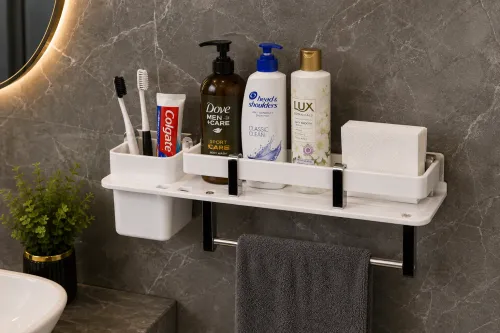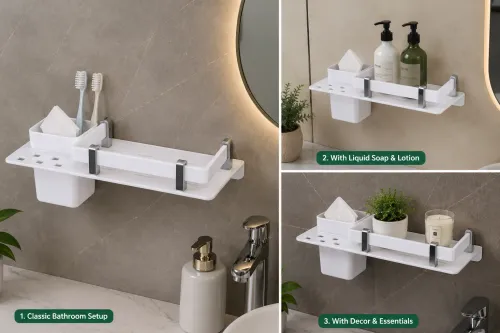
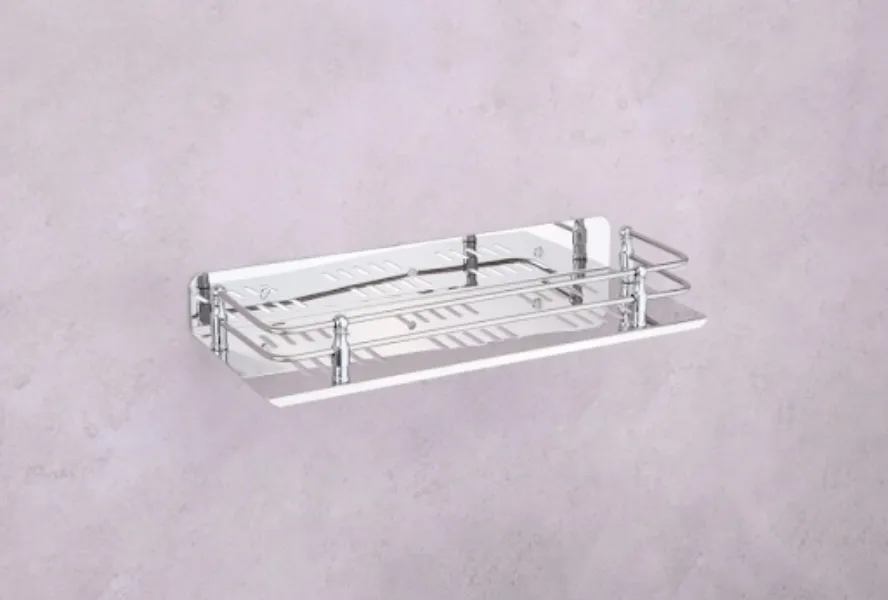
Wall storage is valuable in bathrooms, kitchens, utility areas and commercial spaces where countertops need to remain accessible. A Stainless Steel Shelf can provide a fixed storage area for toiletries, containers, kitchen essentials and frequently used items.
For dealers, builders, hotels and project buyers in Gujarat, however, shelves should be evaluated according to size, construction, mounting and intended load rather than appearance alone.
Start With the Intended Application
The first question is what the shelf will hold.
A bathroom shelf used for toiletries has different requirements from a kitchen shelf carrying containers. Commercial installations may also experience heavier and more frequent use than residential ones.
Before choosing, identify:
- Intended room
- Available wall dimensions
- Items being stored
- Approximate load
- Exposure to moisture
- Cleaning frequency
- Required shelf depth
This prevents selecting an accessory that looks suitable but performs poorly in the actual space.
Check the Dimensions Carefully
One of the most common buying mistakes is estimating shelf size visually.
Measure the available wall area and check for doors, windows, taps, mirrors, cabinets and electrical fittings. Shelf depth is particularly important in compact rooms because an excessively deep shelf can obstruct movement.
For builders purchasing for multiple units, standardised measurements can simplify installation and procurement.
Construction Matters
A shelf should feel stable and properly finished. Examine bends, joints, edges and mounting points.
Buyers should ask about the stainless steel specification relevant to the product rather than assuming every stainless steel accessory is identical.
Commercial procurement teams should also confirm whether the selected construction is appropriate for their environment and cleaning routine.
Installation Has a Direct Impact on Performance
Even a well-made shelf can perform poorly when mounted incorrectly.
Installers should assess the wall type, select appropriate fixing hardware and ensure the shelf is level. The installation should account for the expected load rather than simply attaching the shelf wherever space is available.
Exceeding the recommended load can create unnecessary stress on the shelf and wall fixings.
Care After Installation
Routine cleaning helps maintain appearance and hygiene.
Dust, soap residue, kitchen splashes and water marks should be removed using methods suitable for the product finish. Abrasive materials may create scratches, particularly on polished surfaces.
After cleaning, wiping away remaining moisture can help keep the shelf looking neat.
Periodic inspection of wall fixings is sensible in commercial environments where shelves receive frequent use.
Comparing Products for Bulk Procurement
Wholesalers and project buyers should evaluate consistency across multiple units.
Check:
- Dimensional consistency
- Finish quality
- Edge finishing
- Mounting arrangement
- Packaging protection
- Product availability
- Repeat supply potential
A low unit price may not represent good procurement value if the product creates installation difficulties or inconsistent presentation across a project.
Sourcing for Projects in Gujarat
Gujarat's residential, hospitality, restaurant and commercial construction sectors create varied demand for practical storage accessories. Builders may require standardised shelves for multiple bathrooms, while dealers need sizes and designs that suit different customer segments.
HV Enterprise manufactures acrylic and stainless steel kitchen and bathroom accessories for dealer, distributor and project requirements. Buyers considering a Stainless Steel Shelf can evaluate the product according to dimensions, intended placement, construction and order quantity before procurement.
Frequently Asked Questions
Can stainless steel shelves be installed in bathrooms
Yes, suitable models are commonly used for bathroom storage. Product specifications and care requirements should still be checked.
How is the correct shelf size determined
Measure available width, depth and surrounding clearances before selecting the product.
Can heavy items be stored on the shelf
Only within the product's intended loading capacity and with appropriate wall installation.
What should project buyers confirm before ordering
Specifications, mounting requirements, dimensions, finish, packaging and quantity availability are important considerations.
A shelf becomes useful when it fits the wall, storage requirement and installation environment. Measuring first and evaluating construction carefully can prevent many common purchasing problems.
Keywords