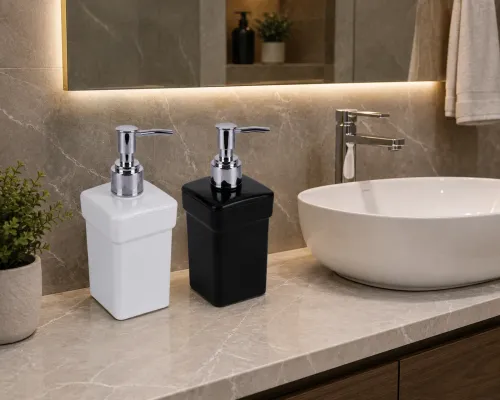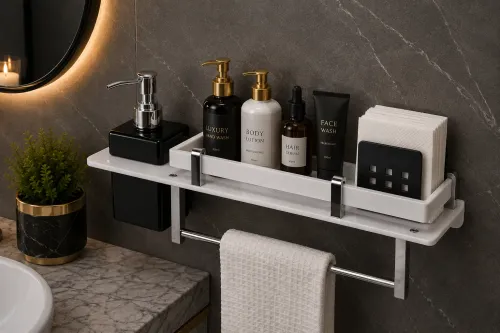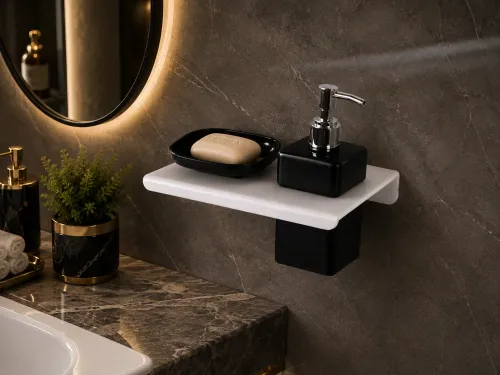
Bathroom moisture tests more than the holder’s appearance: repeated splashing, steam, condensation, hard-water deposits, and trapped water expose weak materials and poor designs. By the end, you will know how to compare stainless-steel grades, mounting methods, drainage, tumbler fit, cleaning needs, and acrylic alternatives before choosing a holder.
Key takeaways
- Choose stainless steel with a smooth, non-porous finish.
- Keep the holder clear of direct spray and standing water.
- Match the holder opening to the tumbler’s base and diameter.
- Remove surface stains with mild soap, water, and a soft cloth.
Why stainless steel tolerates repeated bathroom moisture
Repeated wetting does not quickly overwhelm a stainless steel bathroom accessory because oxygen helps form a chromium passive film on the surface. This thin protective layer reforms after minor exposure, while a smooth, non-porous finish gives soap and water fewer places to lodge and makes wiping straightforward.
| Grade | Protection | Best fit |
|---|---|---|
| 304 stainless steel | Reliable resistance for ordinary indoor humidity and routine splashes | Most home, office, and hotel bathrooms |
| 316 stainless steel | Molybdenum improves resistance to chloride-induced pitting | Coastal bathrooms, salty residues, and heavily chlorinated cleaning regimes |
Humidity alone is less aggressive than chloride deposits. As water evaporates, salt from coastal air, skin products, or residue from harsh cleaners can concentrate into spots that attack the surface.
Grade does not guarantee a rust-free holder. Poor polishing, carbon-steel contamination, damaged or uncleaned welds, unsuitable screws, and water-trapping geometry can create staining or pits on either grade. Look for:
- The stated grade: 304 stainless steel or 316 stainless steel
- Stainless-steel or properly isolated fasteners
- A weld-cleaning process such as mechanical cleaning, pickling, and passivation
- A smooth surface finish without burrs, deep scratches, or crevices
Treat an unspecified “stainless steel” claim as incomplete. Ask for these details before comparing price or appearance.
How mounting design and placement control moisture exposure
Mounting choice controls both support and moisture exposure. Compare the options against your tile, expected load, and splash pattern before installation.
| Option | Load and fixing | Tile and moisture performance |
|---|---|---|
| Wall-mounted tumbler holder | Highest stability when drilled and fixed with stainless or isolated fasteners | Works across tile types; resists steam and splashes when sealed and kept outside direct spray |
| Suction-mounted holder | Light loads; no drilling | Needs smooth, non-porous tile and a clean, dry surface; condensation and repeated wetting can release the seal |
| Adhesive bathroom holder | Light to moderate loads; no drilling | Bonds best to smooth, clean tile; respect curing time, because steam or water can weaken an uncured bond |
| Countertop tumbler holder | No drilling; stability depends on its footprint | Fits most surfaces but can sit in standing water and restrict cleaning underneath |
A wall-mounted tumbler holder is the dependable choice for a frequently used, heavier tumbler. Suction and adhesive systems suit lighter loads, but inspect them for gradual detachment after repeated wetting rather than waiting for a sudden fall.
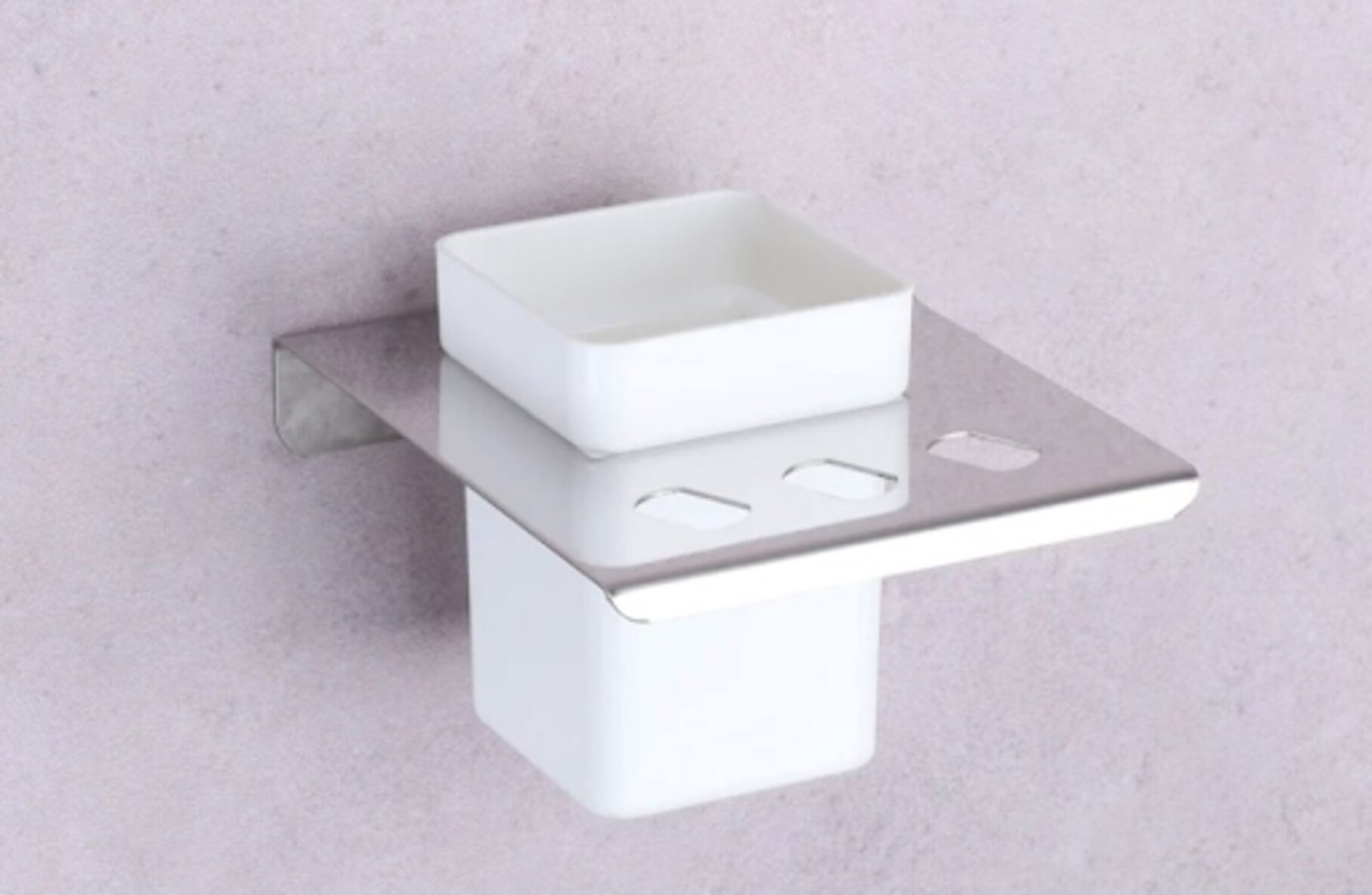
Place any holder away from direct shower spray, above the level where water collects, and near the basin if you use the tumbler for rinsing. Choose an open bottom, drain holes, or a raised base: water must escape from beneath the cup and holder.
A decorative closed ledge traps water against the underside, creating staining, odour, and oxygen-poor crevices where pitting or corrosion can begin. Leave enough clearance to wipe behind a countertop tumbler holder and around its drain paths.
Check the tumbler fit and compare stainless steel with acrylic
Measure the tumbler before choosing a holder: a loose fit tips, while a tight fit traps rinse water. Record the tumbler holder size against these dimensions:
- Outside diameter: compare it with the holder’s internal diameter, leaving enough clearance for easy removal.
- Height: check the holder’s height clearance so the cup does not bottom out or sit above its rim support.
- Base shape: a flat, square base needs stable contact; a rounded base can rock in a narrow holder.
- Taper: compare the widest and narrowest points, not just the base measurement.
- Handle position: choose an open side or enough clearance for the handle to pass without twisting the cup.
Round and square cups do not behave identically. A round cup may rotate and drain evenly, while a square cup can catch on corners or rest on two points. Leave ventilation around the cup, and choose an open bottom or drain gap so moisture does not remain trapped underneath.
Acrylic versus stainless steel involves a visual and maintenance trade-off.
| Material | Advantages | Limitations |
|---|---|---|
| Stainless steel | Visually substantial, wipe-clean, resistant to yellowing, and tolerant of repeated wetting | Less transparent and can show water spots |
| Acrylic | Transparent, lightweight-looking, and suitable for a brighter appearance | Scratches more easily, can yellow, and may become brittle under impact, heat, or unsuitable cleaners |
Choose stainless steel for moisture tolerance and durability; choose acrylic when transparency matters and you can control scratches, heat, and cleaning chemicals.
Tell surface staining from corrosion and clean without damaging the finish
Wipe the area with a damp microfiber cloth, then inspect it under strong light. Check welds, folded seams, fasteners, underside joints, and drain openings, where trapped moisture and contamination concentrate.
- Water spots usually remain on the surface and disappear after cleaning.
- Tea staining stainless steel appears as a brown film, especially near welds, edges, crevices, or chloride deposits.
- Surface rust leaves orange-brown marks that can come from embedded iron, carbon-steel wool, or contaminated tools.
- True corrosion shows raised pits, rough craters, or small holes. If pitting remains after cleaning, stop using the holder and ask the supplier for advice or replace it.
Use this stainless steel cleaning routine:
- Apply warm water and mild dish soap with a soft cloth.
- Move the cloth with the grain rather than in circles.
- Rinse away all soap and residue.
- Dry the holder immediately, including its underside and drain openings.
Never leave chlorine bleach or concentrated hypochlorite cleaner on the surface. Avoid abrasive pads, carbon-steel wool, and tools that can embed iron and create new rust-colored marks.
Treat adhesive and suction mounts separately. Clean around the mount with a damp cloth, but do not soak the adhesive bond, flood the suction cup, or lift its sealing edge. A mark that returns after cleaning points to ongoing contamination or corrosion, not an ordinary water spot.
Use a procurement checklist for a holder that stays dry and stable
Buy the complete assembly, not the word “stainless.” For homes, hotels, offices, and other commercial bathrooms, a useful stainless steel holder specification covers the metal, fabrication, drainage design, fasteners, and installation.
- Confirm 304 or 316 stainless steel. Choose 316 for coastal air, salty residue, or heavily chlorinated cleaning; 304 suits ordinary indoor bathrooms.
- Require smooth, continuous surfaces with no sharp folds, dirt-trapping overlaps, or rough pits.
- Ask whether welds were mechanically cleaned, pickled and passivated, or treated through another documented weld passivation process. Heat tint left on a weld can reduce corrosion resistance.
- Specify stainless-steel fasteners, or fasteners isolated from the holder with suitable nonconductive washers or sleeves. Zinc-plated and ordinary carbon-steel screws can rust, stain the body, and promote galvanic attack.
- Choose an open bottom, drain holes, or a raised base so water leaves the tumbler and air reaches its underside.
- Check rounded, cleanable edges and a mounting system matched to the tile surface, drilling method, and expected load.
- Request care instructions and the grade in writing. HV Enterprise is one supplier you can ask for these details during bathroom accessory procurement, instead of judging catalogue photographs.
A 316 holder with trapped water can fail before a well-finished 304 holder with proper drainage. Reject any design that leaves the tumbler in stagnant water, blocks underside access, or cannot provide its grade and care instructions.
Frequently asked questions
Why does stainless steel tolerate repeated bathroom moisture?
Chromium forms a thin passive film that protects the surface and reforms after minor exposure. A smooth, non-porous finish also limits places for soap and water to collect.
Where should you mount a stainless steel tumbler holder?
Mount it away from direct shower spray, tap splash, and areas where water pools. Leave enough clearance beneath the tumbler for drainage and airflow.
How do you compare stainless steel and acrylic tumbler holders?
Check tumbler diameter, base support, cleaning needs, and mounting stability. Stainless steel offers a rigid, moisture-tolerant surface, while acrylic provides a lightweight option with visible contents.
How can you tell surface staining from corrosion?
Surface staining usually sits on the finish and lifts with mild soap and a soft cloth. Corrosion appears as pitting, roughness, or damage that remains after cleaning; avoid abrasive pads and chlorine products.